
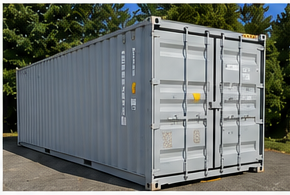
Whether you actually need an insulated shipping container comes down to one question: will anyone be inside it regularly, or is it just holding gear? A bare steel box works fine for pure storage. The moment you add a workshop, office, ADU, or anything you’ll spend real time in, insulation stops being optional and starts being the difference between a usable space and one you avoid half the year.
This guide covers what insulation actually solves for Oregon’s climate, the real options available, and what you need alongside it to make it work. It’s written by the team at Iron Box, Oregon’s own shipping container dealer, based out of our yard in Creswell, where we install these systems in-house.
Quick Answer: You need insulation if people will spend time inside the container regularly, for a workshop, office, ADU, or climate-sensitive storage. Spray foam generally offers the best combination of insulation value, air sealing, and moisture control, but it has to be paired with ventilation, since insulation alone can’t eliminate humidity and condensation.
Why Insulation Matters for Oregon’s Climate
Steel is a poor insulator on its own, which means an uninsulated container swings hard with Oregon’s weather: cold and clammy in winter, an oven in summer. The bigger issue is moisture. Without careful planning, trapped humidity inside a container can lead to condensation, corrosion, and mold growth, and Oregon’s mix of coastal moisture, mountain temperature swings, and seasonal humidity makes that risk worse than it would be in a drier climate.
Insulation addresses the temperature side and helps control moisture, which is why it matters more here than it might in a more stable climate.
Insulation Options: Spray Foam, Foam Board & Fiberglass
Iron Box offers three approaches, and which one makes sense depends on budget and how the space will be used:
- Spray foam provides one of the highest insulation values available while sealing gaps that let moisture and air in. It’s generally the top recommendation when insulation value and air sealing both matter.
- Rigid foam board offers strong thermal performance while taking up less interior space than some alternatives, useful when you don’t want to lose usable square footage to thick wall buildup.
- Fiberglass is a cost-effective option when installed with proper framing and vapor barriers, a reasonable choice if budget is the main constraint.
Insulation Alone Isn’t Enough: Ventilation
Insulation controls temperature, but it can’t eliminate moisture by itself. That’s what ventilation is for, and Iron Box offers two approaches:
- Passive ventilation uses roof vents, side vents, and louver systems to promote natural airflow without electricity.
- Powered ventilation uses electric exhaust fans and intake systems to continuously move air through the container.
Proper vapor management helps prevent condensation from forming inside insulated walls in the first place, which is why insulation and ventilation are typically planned together rather than insulation alone.
Does Insulation Work on Used Containers Too?
Yes. Both new and used shipping containers can be professionally upgraded with insulation and ventilation systems, so you don’t need to start with a new container to get a properly climate-controlled space. If you’re also weighing new vs. used for other reasons, insulation compatibility doesn’t need to be part of that decision.
Will Insulation Compromise the Container’s Strength?
No, not when it’s professionally installed. Insulation and ventilation systems don’t compromise the container’s structural integrity when done correctly, and ongoing maintenance is typically minimal, mostly periodic inspection of vents, seals, and any ventilation equipment.
What Does Insulated Container Modification Cost?
Iron Box doesn’t publish flat insulation pricing, since the real number depends on container size, which insulation material you choose, the ventilation system, and any interior finish requirements on top of it. A spray foam job on a small container costs differently than fiberglass on a large one with powered ventilation added. Request a quote with your specific setup for an accurate number.
Why Oregon Buyers Choose Iron Box
Iron Box has delivered 1,000+ containers across Oregon, and insulation work happens in-house, not subcontracted out:
- Oregon-owned and operated. You’re talking to a local team operating out of our own yard in Creswell, OR.
- Modifications happen in-house. Insulation, ventilation, electrical, and doors are all done in our own Creswell shop.
- Every container is inspected before delivery. Each unit gets a pre-delivery quality inspection and an honest condition grade.
- Works on new or used. You’re not limited to new containers just because you want insulation done right.
Frequently Asked Questions
Do I need insulation for a shipping container?
It depends on use. Pure storage usually doesn’t need it. A workshop, office, ADU, or anything people will spend regular time inside needs insulation to control temperature swings and reduce the condensation risk that comes with Oregon’s coastal moisture and seasonal humidity shifts.
What’s the best insulation for a shipping container?
Spray foam generally offers the best combination of insulation value, air sealing, and moisture control, which is why it’s Iron Box’s top recommendation when performance matters most. Rigid foam board and fiberglass are both solid alternatives depending on your budget and how much interior space you want to preserve.
Can insulation alone prevent condensation in a shipping container?
No. Insulation alone cannot eliminate moisture. Proper ventilation, passive or powered, is needed alongside insulation to remove humid air and reduce condensation. Pairing the two is standard practice, not an optional upgrade, especially in Oregon’s more humid coastal and mountain regions where that moisture risk runs highest.
Can I insulate a used shipping container, or does it need to be new?
Both new and used shipping containers can be professionally upgraded with insulation and ventilation systems. Condition grade affects the container’s price and cosmetic state, not whether it can be insulated, so a used container is a perfectly reasonable starting point for an insulated build.
Does insulation weaken the container’s structure?
No, not when professionally installed. Insulation and ventilation systems don’t compromise structural integrity when done correctly. The container still relies on its original steel frame for strength, since insulation only affects the interior climate, not the structural shell holding the whole unit together.
What’s the difference between passive and powered ventilation?
Passive ventilation uses roof vents, side vents, and louvers to move air naturally, with no electricity required. Powered ventilation uses electric exhaust fans and intake systems to continuously circulate air. Powered systems move more air consistently, while passive systems cost less and need no power source.
How much does it cost to insulate a shipping container?
It depends on container size, insulation material, ventilation system, and any interior finish requirements. Iron Box doesn’t publish flat pricing because of how much that combination varies project to project. Request a quote with your specific setup in mind for an accurate number.
How much maintenance does an insulated container need?
Minimal. Periodic inspection of vents, seals, and any powered ventilation equipment is typically all that’s required to keep an insulated container performing well. It’s not a high-maintenance system once it’s properly installed, especially compared to the upkeep a traditional structure would need over the same span.
Ready to Talk Insulation Options?
Whether you’re planning a workshop, office, or ADU, Iron Box can walk through which insulation and ventilation combination actually fits your project and budget. No pressure, just a straight answer on what you need.
Request a Modification Quote or call (541) 246-4696 (Mon–Fri, 8am–5pm) to talk to a real person on our team who actually knows the inventory.